By John Yoswick
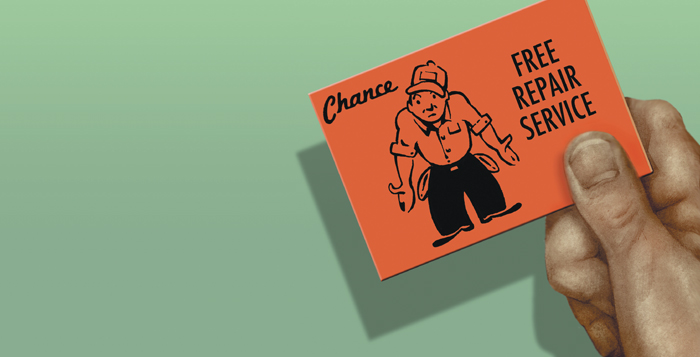
What would you do if there were 13 necessary repair operations your shop may be performing every month — or even every week or day — that other shops are regularly being paid for but that your shop is essentially doing for free? Would you want to know? Would it help you improve your business?
That’s the premise behind a quarterly series of surveys called “Who Pays for What?” being conducted by Mike Anderson of Collision Advice along with CRASH Network (for which this writer works for as an editor).
“We’ve compiled a list of dozens and dozens of ‘not-included’ procedures and estimate line items to find out how frequently shops are billing for them — and being paid — when they are necessary and are performed as part of a repair,” industry trainer and consultant Anderson said. “I’m often amazed at how many shops say they never bill for some of these items when a significant percentage of other shops say they are regularly paid for them.”
Here’s information on just 13 of the procedures asked about in the quarterly survey series, which gather information from more than 900 shops (per survey) nationwide.
1. Prep raw plastic parts
Anderson said the estimating systems recognize that additional labor is needed to prepare new bumper covers or other plastic parts that are not primed at the factory. Each of the systems provides a formula for calculating this additional not-included labor.
“For AudaExplore, it is 20 percent of the basecoat time, with a minimum of two-tenths,” Anderson said. “CCC is 25 percent of the basecoat time, with a maximum of an hour, and Mitchell is 20 percent of the basecoat time, with no minimum or maximum.”
Perhaps because these formulas have been established within the estimating systems, nearly three-quarters of shops (73 percent) taking the “Who Pays” refinish operations survey in January reported that, when they include this procedure on their invoices, they are paid “always” or “most of the time” by the eight largest auto insurers.
Anderson said virtually all Toyota/Lexus replacement plastic bumper covers are sold as raw plastic, as are some Hyundai bumper covers.
“I’ve also seen some raw plastic grilles and cladding,” he said.
That’s why he’s surprised that about 5 percent of shops responding to the survey said they have never sought to be paid for this operation.
2. Protect vehicle interior and components during repair
Almost half of shops (48 percent) responding to the “Who Pays” body labor operations survey in April said that they are paid always or most of the time for the labor to use masking, welding blankets, bubble-wrap, etc., to prevent sparks, dust, etc. from entering or damaging the interior or other parts of the vehicle when its necessary during repairs. Another roughly 29 percent said they are paid for this at least “some of the time.” Yet more than 1-in-5 shops acknowledge never having billed for this not-included procedure when it is necessary and they do it.
3. Labor to feather, prime and block
A little over one-third (36 percent) of shops reported being paid always or most of the time for this procedure, which involves bringing a repaired area that is finished to 150 grit to the condition of a new, undamaged part.
“All the estimating system refinish times are based on new, undamaged panels,” Anderson said. “But repair work on a welded-on panel, for example, ends with the technician finishing it off at 150 grit. A panel finished with 150 grit is not the equivalent to new and undamaged. To get to that level requires finishing the repaired panel to 320 grit. And the paint and abrasives manufacturers concur that you should not jump more than two grit-sizes. You can’t go from 150 right to 320 grit. It’s that process in between the two that’s essentially covered by the not-included labor time to feather, prime and block.”
The “Who Pays” survey found some significant differences in how regularly some insurers pay for this procedure compared to others. More than 60 percent of shops reported that State Farm pays for this procedure always or most of the time, for example, while less than 40 percent of shops said that about Progressive.
But again, more than 1-in-5 shops said they have never sought to be paid for this frequently necessary procedure.
Interestingly, well over half of shops (57 percent) reported that the labor to feather, prime and block is conducted in their shop by a painter or prepper compared to just 16 percent who said it is done by a body technician. Anderson believes this is in part because EPA regulations require that priming be done by someone who has completed paint training.
Despite this, just over half of shops (51 percent) said they are paid for the procedure at body labor rates rather than paint labor rates.
How are shops calculating labor time for this procedure? About one-third of shops say it’s a judgment time with no set formula, while about 28 percent calculate it as a percentage of repair time. Of those shops basing it on repair time, one-third charge 20 percent of repair time while another 1-in-4 shops charge just 10 percent of repair time. A similar percentage (25 percent) charge 25-30 percent of repair time.
4. Airbag residue clean-up
Removing the powder residue left inside a vehicle after an airbag deployment is a “not-included” labor operation. Your shop may well be among the more than 60 percent who have not charged for this procedure, but it could be among the more than one-third (36 percent) who say they are paid for it always or most of the time when it is necessary and they bill for it.
5. Color tint
More than half of shops (55 percent) say they are regularly paid for this procedure, but Anderson points out that the survey found that more than 10 percent of shops said they have been unsuccessful in negotiating to be paid for it, and another roughly 5 percent of shops say they haven’t even tried.
“If you take any paint company course or I-CAR class, it’s made clear that you need to tint to achieve a blendable match,” Anderson said. “In some cases, you may need to tint AND blend; it’s not an either/or thing. And as we start to see more 3-stage and 4-stage paints, tinting may become even more commonplace.”
6. Clean-up old urethane
When glass is removed, there’s often labor required to remove or level the old urethane left behind. More than one-third (37 percent) of shops who bill for it said they are paid always or most of the time for this procedure when it is necessary, yet more than half of shops have not sought payment for it.
7. Labor for second color set-up
This is the additional labor needed to look up and mix a second color formula when an inside area, such as the trunk or under-hood, is a different color than the exterior of the vehicle.
“AudaExplore is currently the only estimating system that has a formula for this,” Anderson said.
Your shop could be among the 42 percent being paid for this regularly, or among the nearly one-third who haven’t even tried negotiating for it.
8. Labor to gain collision access.
“It is very surprising to me that, in most regions, 25 percent of shops have not sought to be paid for this,” Anderson said. “It has been my experience that it is not uncommon for a collision technician to need to cut an access hole to remove components from a damaged door, for example, or to get the latch open when the hood is damaged.”
Anderson believes more shops would seek to be compensated for this labor when it is necessary and performed if they knew, as the survey in April found, that 54 percent of shops that bill for this are paid for the procedure always or most of the time.
9. Match OEM texture of chip/gravel/stone guard
While a strong majority of shops (88 percent) successfully bill for the labor to apply chip/gravel guard, only about half that (43 percent) say they are paid regularly for the labor to match the texture of the material to the OEM. Why the difference? In part, because more than 40 percent of shops acknowledge they aren’t billing to match the OEM appearance.
10. Repair adjacent panels
Anderson said adjacent panel damage (like weld burn damage) is one of the most commonly overlooked items on estimates.
“When a technician removes a damaged welded-in panel for replacement, it is almost always necessary to repair the adjacent panels that were damaged by drilling or grinding during the removal process,” Anderson said. “That damage is unavoidable. After removing a rear body panel, for example, a technician may have to repair the left and right frame rail flanges, the left and right tail light pockets, the floor pan area, and possibly floor or quarter panel extensions.”
About two-thirds of shops are being paid for this procedure regularly when it is needed, but April’s survey found more than 10 percent of shops have never billed for this not-included procedure.
Similarly, Anderson said, he sees a lot of shops leave off the labor to refinish adjacent panels after weld burn damage.
11. Mask during priming
If masking is necessary to protect the vehicle while primer is being applied, this is a not-included operation. Nearly one-third of shops acknowledge not having billed for this procedure; among the shops that do, more than one-third (37 percent) report being paid always or most of the time.
12. Replace vapor barrier
Anderson said it’s important for shop estimators or repair planners to check OEM procedures to determine whether the vapor barrier is designated as a 1-time use part and must therefore be replaced.
“This is common if there are airbag pressure sensors in the door,” he said.
In either case, labor to R&I or replace vapor barriers is a not-included operation that 3-in-5 shops say they are regularly paid for when it is necessary. About a third of shops, however, haven’t sought to be paid for this labor.
13. Inspect seat belts
“Out of all of the procedures in the surveys, this is the one that most keeps me awake at night,” Anderson said. “Every OEM has a very specific procedure for how to inspect seatbelts. Some even go so far as to state seatbelts must be replaced if they were in-use during a collision. Some OEMs also state that the inspection process includes using a scan tool.”
Despite this, the “Who Pays” survey in April found more than 50 percent of shops have not sought to be paid for this process (just over 30 percent of those who do say they are paid regularly).
“The response to this question is very concerning in that it indicates to me that too few shops are researching OEM repair procedures and are thus not aware of this requirement,” Anderson said. “As an industry, we must accept responsibility for researching and following the requirements for this on every vehicle.”
These are just a handful of the more than 100 potential estimate line items asked about in the four “Who Pays for What?” surveys each year. Many of these operations may add only a few tenths of a labor hour to your estimates or invoices, but even that can add up to a significant difference depending on how regularly you are currently conducting these procedures for free. Added paint labor can also increase compensation for the needed materials.
Collision repairers can download the complete results of previous surveys in the series — reports that also include resources that can help you use the findings in your business — for free at https://www.crashnetwork.com/collisionadvice. •
John Yoswick, a freelance writer based in Portland, Ore., who has been writing about the automotive industry since 1988, is also the editor of the weekly CRASH Network bulletin (www.CrashNetwork.com). He can be contacted by email at john@CrashNetwork.com.