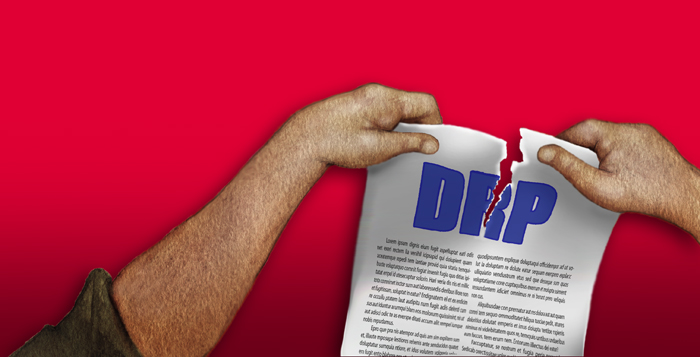
When is the right time to quit an insurer’s direct repair program?
By John Yoswick
The owner of a Wisconsin shop says that dropping the American Family direct repair program was his “best decision ever.”
“I was tired of being cheated,” the shop owner, who asked not to be identified, said.
That’s not to say the decision came easy. American Family is the largest auto insurer in Wisconsin, with more than 19 percent market share (compared to about 16 percent for Progressive and about 15 percent for State Farm). The shop had participated in the American Family DRP for eight years, and the insurer’s work had accounted for more than 20 percent of the shop’s $120,000 in monthly sales. Still, the owner ultimately made the decision to cut ties with the program.
“We follow manufacturers’ procedures and prove — usually with photos — that we did the work, yet they’d deduct operations from the final bill saying, ‘We don’t think you needed to do that,’” the shop owner said. He said the insurer used “bogus, cut-and-pasted ‘justifications’ for removing blend panels” on every estimate that included hood-to-fender blends.
So what has been the fallout from the decision? Despite dropping the program, the shop owner said, he has seen no change in work volume and still has 11 employees, but has less stress and “no grey areas” on what the shop will be paid.
“There are now additional phone calls for the estimator to review estimates and agree on a price [with American Family], but the check is the amount that we expected,” the shop owner said.
The Wisconsin shop owner isn’t alone either in deciding to drop one or more DRPs nor in finding it being a positive change. As Automotive Report reported in December, a mid-2017 survey of more than 1,000 shops nationwide found that of those who had fewer DRPs than they did a year earlier, 85 percent said it was their decision — not the insurers’ — to end the DRP agreement. And nearly half (47.6 percent) of those shops said they had higher sales in the first half of 2017 than they did in the first half of 2016 when they had more DRPs. Only one-in-five said their sales were lower — not dissimilar to the 22 percent of shops who reported lower sales despite making no change in the number of DRPs they had.
So how can a shop know when it’s time to drop out of a DRP, and what’s the best way to go about it?
Unreasonable demands
Shops that have dropped DRPs most commonly cite such reasons as the insurer having “unreasonable demands” or not being “willing to pay for a proper repair.”
The manager of a dealership operation in the Southwest (who also asked not to be identified), for example, said his company in the past year chose to drop out of State Farm’s Select Service program, in which the shop had participated in since the program’s inception.
“Primarily we ended the relationship due to the constant badgering and relentless pressure to repair vehicles cheaper and faster as compared to other shops on the program,” the manager said. “All this while parts prices were increasing, business costs were increasing and new technology was adding to repair procedures. Also, State Farm was increasing parts procurement and documentation requirements. This increased our staffing requirements. They claimed to be interested in [proper] training and proper repairs. However, a properly-trained staff, following OEM procedures, will always lead to a more thorough and more costly repair. Their actions contradicted their words more often than not. This was why the relationship no longer made sense for us.”
The decision was difficult, as it was for the Wisconsin shop, because State Farm had accounted for about 20 percent of the dealership operation’s $6.5 to $7 million in annual body shop sales.
“Cutting ties with the largest insurer in the U.S. was a tough decision, but it was the right decision,” the manager said. “Although our car count is down, our sales have not suffered. We were able to reduce staff and handle the same volume of work. Our gross and net profits are up. Who doesn’t want to do less work for the same revenue and more profit? That is a no-brainer right there. Best of all, morale is up tremendously without the constant, ‘You suck,’ coming from State Farm’s management.”
The manager said the operation had 12 DRPs at one point but has whittled it down to just four while maintaining sales volume.
“We are not anti-DRP,” the manager emphasized. “We see the value in having good, mutually-beneficial relationships with insurers,” he said. “However, when the insurance company starts putting its own profits ahead of vehicle safety, customer satisfaction and our profits, we start looking for other ways to be successful.”
Don’t burn bridges
Some shop owners who have dropped DRPs said they did so because programs can evolve into becoming much more labor intensive than others, with more administrative requirements along with increased review and negotiations of individual jobs. While having one such program may still work for a shop, having the wrong mix of too many “high-maintenance” programs or too few programs that are less intrusive can mean it’s time for a change.
Shop owners often acknowledge after dropping a program that they probably stuck with it much longer than they should have. One such owner said a particular program almost robbed him of his interest in continuing in the industry. The program regional supervisor at the insurer was a constant source of threats, he said, calling for the shop to make changes or risk being dumped from the program. Such constant threats, the shop owner decided, aren’t part of what is supposed to be a “partnership.”
He and other shop owners who have recently dropped one or more DRPs offer a number of suggestions for those considering a similar move.
First, don’t allow any one program to account for such a large portion of your business that dropping it will seem devastating. One shop owner, for example, said one particular DRP had grown to account for nearly half of his business gross sales. That made dropping it, as the program became less appealing and profitable, all the more difficult, he said.
“I won’t make that same mistake again,” he said. “No single program will ever become more than 20 percent of our business.”
That said, while a shop should prepare for a loss of sales when dropping a program, any large insurer’s business isn’t going to completely disappear when you’re off its DRP.
“That company that accounted for almost 50 percent of our business has about a 22 percent market share here,” the shop owner said. So we didn’t lose 50 percent of our business when we dropped the DRP. It just moved downward, closer to that 22 percent rather than 50. None of the largest insurers have enough DRPs to handle all their work, so you will continue to do business with them.”
That’s why being diplomatic when dropping a DRP is important, he said. It’s natural to want to “kick them to the curb” and let them know what you think about their company and program. But you’re still likely to be interacting with that company for non-DRP claims, so don’t create a hostile environment.
“The other thing is that programs change over time,” another shop owner said. “You can decide a particular program isn’t as good as it used to be, but perhaps down the road that program can change back. Local management can change, for example. We’re on some programs now when years ago we would have said that would never happen. So don’t burn bridges.”
Think about what’s next
Shop owners also say it’s important to have a game plan in place before dropping a program. Crunch some numbers to figure out what adjustments you can make if dropping the program results in significant changes to your revenue. One shop owner, for example, realized he perhaps had more managers within his business than were needed and could cut costs without losing production staff.
Also consider if there are alternative sources of business you could approach to replace some of that DRP’s work. That might mean fleets or dealership referral agreements, for example.
But several shop owners who had dropped larger DRPs said they were subsequently approached by other insurers.
“One insurer said they hadn’t been interested in having us on their DRP because they knew the other larger DRP would be our priority and focus,” one shop owner said. “But once they found out we dropped that other DRP, they said they had been looking to add a shop in our area. It wasn’t quite as large a program, sales-wise, but it didn’t come with nearly as many headaches either. We wouldn’t have ever known it was a better fit for us if we hadn’t dropped the other company’s program.” •
John Yoswick, a freelance writer based in Portland, Ore., who has been writing about the automotive industry since 1988, is also the editor of the weekly CRASH Network (www.CrashNetwork.com). He can be contacted by email at john@CrashNetwork.com.